Sorrell: Holdco exits scarce as S4 stabilise
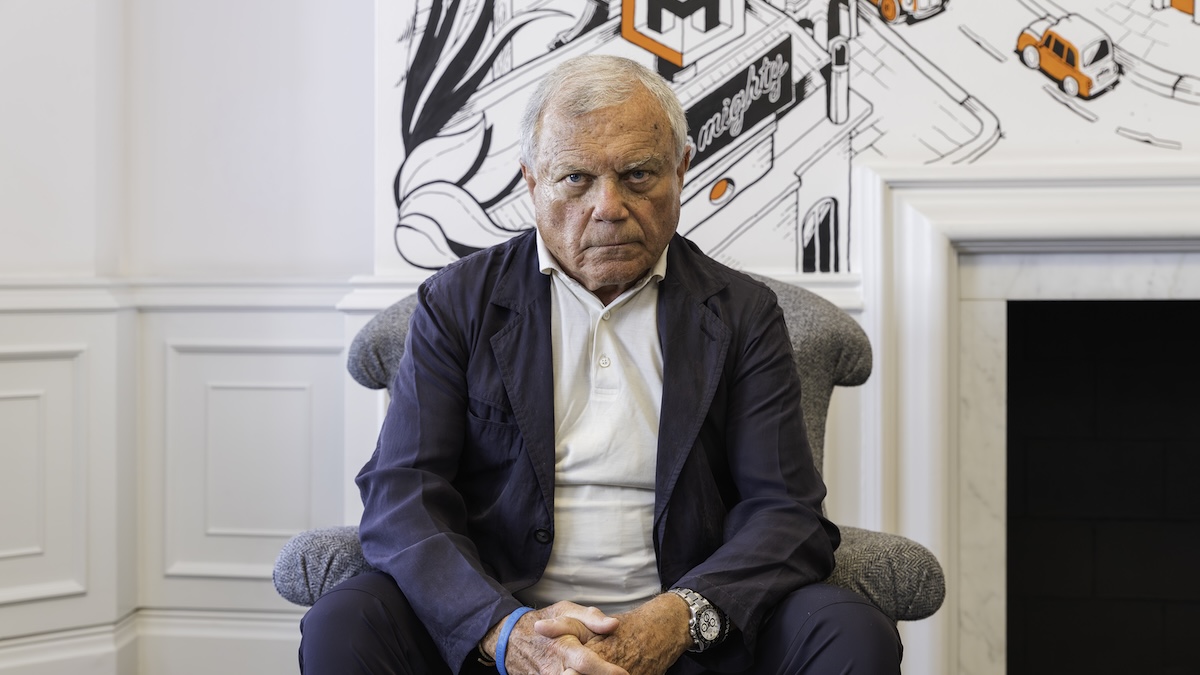
Sir Martin Sorrell says there are “very few, if any, exits.” That blunt diagnosis is the headline from an ADWEEK interview in which the veteran dealmaker runs through the state of the biggest advertising holding companies, explains why S4 Capital’s acquisitive model has been tested, and re-lists the handful of agency assets that shaped his rise — and S4’s build-out — in recent years.
Sorrell’s position is simple and specific: large holdcos are more likely to be targets than buyers right now, syndicated transactions would be needed for the biggest deals, and corporate buyers such as Publicis and Accenture are the ones to watch. The interview — conducted before Publicis said it would buy LiveRamp and Accenture said it would buy Whalar — is a compact reminder of how exposed many groups are to shifting client spend and how that changes strategic incentives.
S4’s past buys: MediaMonks and MightyHive
What happened: After leaving WPP in 2018, Sorrell founded S4 Capital “just weeks later.” S4 “built itself up through acquisition, notably production agency MediaMonks and performance agency MightyHive,” positioning itself as a digital-first holding company.
What S4 lost and gained: Sorrell acknowledges the thesis has been “severely tested” as tech clients — where S4 has “heavy exposure” — pulled back on marketing spend to invest in AI. That contraction hit revenue and shares: revenue contracted and S4’s shares “fell about 38% over the course of last year,” though S4’s “early 2026 results have indicated improvement.” S4 currently views itself as “being in a period of stabilizing its business before revisiting growth-by-acquisition.” He also says integration “has not been perfect by any means,” but that “liquidity is much better.”
Why it matters: MediaMonks and MightyHive are the capability playbooks that defined S4’s digital-first strategy — production and performance. The company’s fortunes remain linked to tech-sector spend: Sorrell explicitly notes “45% of it is tech,” and that those clients are diverting spend to capital expenditure for AI. That concentration explains the vulnerability he describes and why S4 is pausing on aggressive M&A.
WPP’s acquisition history and legacy
What happened: Sorrell reminds readers of his track record: he founded WPP through a reverse acquisition in 1985 and “built it up into a towering ad giant that snapped up major agency brands like J. Walter Thompson, Ogilvy & Mather, and Young & Rubicam.”
What Sorrell is saying now: Despite his history of building through deals, Sorrell says the present environment is hostile to exits. “There are very few, if any, exits. No activists have stepped in. There are no takers,” he told ADWEEK. He raises the practical barrier: “One PE firm couldn’t write the check for WPP or Dentsu. Maybe Bain Capital could have done it on their own.”
Why it matters: The invocation of WPP’s roll-up history is both a reminder of how holdcos scale through M&A and a contrast to today’s market, where capital, appetites and valuations have shifted. Sorrell frames WPP as an example of a model that may need reshaping — “WPP will be in a different form,” he predicts — rather than being an obvious sale candidate.
Publicis and Accenture: buyers in focus (and recent moves)
What happened: Sorrell singles out Publicis as a buyer that has been “on a successful run” and praises its organisational approach. He contrasts Publicis’s “geography first, client second, capability third” structure with how Omnicom and WPP have reorganised “capability-first, client second, geography third.” He adds: “Publicis got it right.”
Contextual facts from the piece: The interview was conducted before Publicis said it would buy LiveRamp, and before Accenture said it would buy Whalar.
Sorrell’s view on corporate buyers and private equity: He speculates Accenture might be a potential acquirer for a major holdco: “If I was [Accenture CEO] Julia [Sweet], I would go for WPP. With them, they could get significantly better. I think the media piece in their hands would be very valuable. But whether they’ve got the balls though… It would be messy.” He says Omnicom “probably isn’t” a buyer, Dentsu “is not going to be in buying mode,” and “Stagwell will try.” On Havas, he offers: “Well, Havas. Maybe not of scale. But [Havas CEO Yannick] Bolloré always sends you in the wrong direction. Always. Keeps you guessing.”
Why it matters: Sorrell is signalling that strategic, corporate buyers — not single private-equity cheques — are the more credible path for transformative consolidation right now. His mention that syndicates would be required for the biggest deals and that “no activists have stepped in” underlines the scale and risk profile of any potential transactions for WPP, Dentsu or similar groups.
Organisation, capability and the matrix debate
What happened: Sorrell critiques capability-led reorganisations. He says Omnicom and WPP have “fallen into the trap of the matrix being driven by capability,” creating “warring factions.” Publicis, by contrast, is “geography first, client second, capability third,” which he says forces integration across markets. He also references John Wren and Omnicom Advertising Group “before they acquired IPG,” saying Wren “had a better strategy” and was “trying to push them together.”
Why it matters: This is not just academic. Sorrell is arguing organisation design affects a holdco’s ability to integrate large acquisitions — and therefore affects their attractiveness as takeover targets or as platforms for further scale.
S4’s immediate priorities
What happened: On S4’s near-term priorities, Sorrell is candid: the business needs “more traction.” He lists S4’s “biggest relationships—Google, Amazon, T-Mobile, Disney, GM, Meta” and reiterates the risk: “the problem is that 45% of it is tech. And they’re all spending money on capex.” He says S4 “relies on wholesale AI adoption” and needs “more car verticals, more financial services verticals, more packaged goods.”
Why it matters: That is a roadmap for what S4 needs to stabilise organically: diversify client vertical exposure beyond highly cyclical tech accounts and strengthen commercial relationships. It explains why S4 has paused on deal-making and is focusing on getting its existing assets to perform better.
What this signals for agency owners, PE buyers and advisory teams
Sorrell’s view is a market snapshot with clear implications. First, large-scale exits of the biggest holdcos are unlikely in the near term because of valuation gaps and the capital required — syndicates, not single PE houses, would be necessary. Second, strategic corporate buyers such as Publicis and Accenture are the most credible actors for transformative deals. Third, firms built around tech-facing, digital-first assets (S4’s MediaMonks and MightyHive being the textbook example) remain exposed to shifts in tech client spend and the timing of AI investment cycles.
For agency owners considering a sale: timing and buyer type matter. Buyers motivated by client relationships and geography-first integration appear, per Sorrell, to be the ones most comfortable extracting value. For PE and strategic buyers: be prepared for syndication and messy integrations; capability-led matrix structures pose integration risk. For roll-up strategists: S4’s pause on acquisitive growth is a reminder that concentration of sector exposure can create asymmetric downside.
Source: ADWEEK M&A (interview with Sir Martin Sorrell conducted by Ryan Joe and Alison Weissbrot)